 Skip to content

Bali’s property market has never been more attractive to foreign investors — and never more complicated to navigate. Prices are rising, rental yields are strong, and new developments are appearing across Canggu, Seminyak, Uluwatu, and Nusa Dua at a pace that feels almost weekly.
But Bali’s legal landscape around foreign property ownership is uniquely complex. Get it right, and you have a high-performing asset in one of the world’s most visited destinations. Get it wrong, and you could lose everything you invested with little legal recourse.
This guide covers everything a foreign investor needs to know before buying a villa in Bali in 2026 — from understanding land titles to calculating realistic returns, spotting red flags, and building a legal team you can trust.
1. Why Bali Remains a Strong Villa Investment Market
Bali consistently ranks among Asia’s top destinations for real estate investment, and the fundamentals behind that reputation are stronger than ever in 2026.
Tourism numbers tell the first part of the story. Bali welcomed over 7 million international visitors in 2024, a figure that has continued to climb through 2025 and into 2026. That sustained tourist demand directly fuels the short-term rental market — the engine that makes villa investment in Bali so compelling. A well-positioned villa in the right zone can generate occupancy rates of 70–85% during peak seasons, producing rental yields that outpace most traditional property markets.
The second driver is price appreciation. Prime areas like Nusa Dua, Canggu, and Uluwatu have seen land prices increase by 15–25% annually in recent years, driven by limited supply, rising demand from digital nomads and long-stay visitors, and growing interest from international investors. Compared to comparable coastal destinations in Thailand, Portugal, or Mexico, Bali still offers relatively accessible entry points — though that window is narrowing fast in 2026.
The third factor is lifestyle. Bali’s combination of year-round warm weather, world-class surf, a vibrant expat community, affordable cost of living, and genuine cultural richness makes it a destination where investors don’t just buy an asset — they buy optionality.
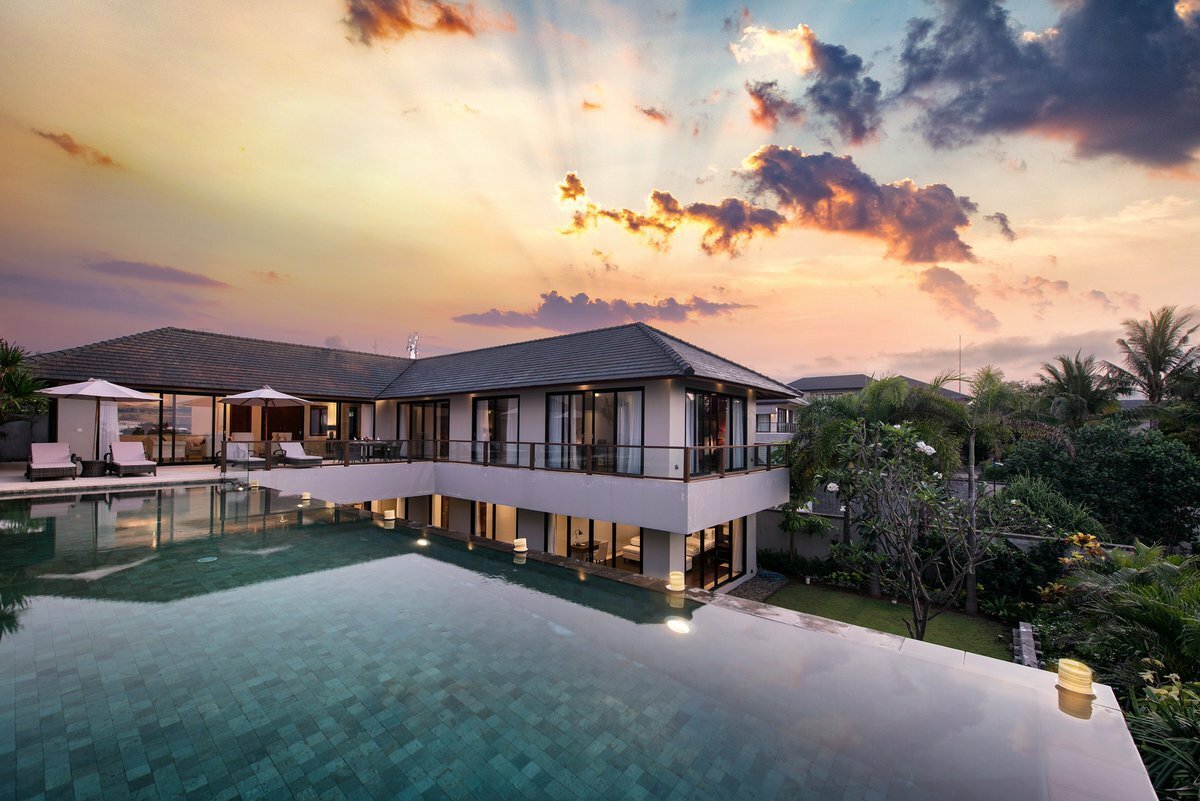
Looking for a proven entry point into the Bali villa market in 2026? OceaniQ Villas in Nusa Dua is an award-winning development offering verified returns of up to 15% in USD, with oceanfront positioning just 80 metres from the beach. Get your ROI calculations →
2. Freehold vs Leasehold: What Investors Must Understand
This is the single most important distinction any foreign investor needs to understand before buying property in Bali — and the one most frequently misunderstood in 2026.
The fundamental rule: Under Indonesian law, foreigners cannot own freehold land (Hak Milik) directly. This is not a technicality that can be worked around — it is a hard legal limit. Any agent or lawyer who tells you otherwise is either misinformed or misleading you.
What foreigners can legally own:
Leasehold (Hak Sewa) is the most common route. You lease the land for a fixed term — typically 25 to 30 years — with options to extend, often bringing the total to 50–80 years. You do not own the underlying land, but you own the right to use it, develop it, and generate income for the lease duration.
Hak Pakai (Right to Use) is a more formal title granted to foreigners married to Indonesian nationals or to foreign-owned companies (PMA). It offers stronger protections than a basic lease and is recorded with the National Land Agency (BPN).
PMA (Foreign Investment Company) is the route many serious investors take in 2026. By establishing an Indonesian legal entity — a PT PMA — you can hold property under the company with more control, better legal standing, and long-term asset security.
The nominee arrangement — avoid it. Putting property in the name of a trusted Indonesian individual on your behalf is technically illegal under Indonesian law, offers essentially zero legal protection, and has resulted in numerous investors losing their properties entirely.
OceaniQ Villas operates with full legal transparency, offering properly structured ownership for foreign investors. Speak to their team about your ownership options →
3. Legal Due Diligence Checklist Before Buying a Villa
Skipping due diligence is the single most common — and most costly — mistake foreign investors make in Bali. Before signing any agreement or transferring any funds in 2026, work through this checklist in full.
Land Title Verification — Confirm the land certificate type (SHM, SHGB, HGB, etc.) and verify it directly with the National Land Agency (BPN). Do not rely solely on a copy provided by the seller. Check for any encumbrances, liens, or disputes.
Zoning Confirmation — Verify the zoning classification through the local DPMPTSP or Bali spatial planning agency. Confirm the land is legally zoned for the intended use — residential, tourism, or mixed.
Building Permits — Request and verify the IMB (now transitioning to PBG under newer regulations). Confirm the permit covers the full footprint of the building as it currently exists. Unpermitted extensions are common and create significant legal liability.
Tax Compliance — Verify that all land and building taxes (PBB) are fully paid and up to date. Request payment receipts for the previous five years minimum.
Seller Identity and Authority — Confirm the seller’s identity matches the registered landowner on the certificate.
Lease Agreement Review — Have every clause reviewed by an independent Indonesian notary or property lawyer. Pay close attention to extension terms, subletting rights, and what happens at the end of the lease period.
Environmental and Access Rights — Confirm legal road access to the property. Landlocked properties are a common and serious problem in Bali.
OceaniQ Villas provides full documentation transparency — including real-time video monitoring of construction progress and a private investor Telegram group. Download their free Bali Real Estate Investment Guide →
4. Zoning Rules in Bali: Residential vs Tourism Zones
Zoning is one of the most misunderstood and consequential aspects of buying property in Bali in 2026. The wrong zone can make your entire investment illegal to operate.
Tourism Zone (Kawasan Pariwisata) is what most villa investors need. Land classified as tourism zone can be legally used to operate short-term rentals, boutique hotels, and commercial villa businesses. The majority of Nusa Dua, Canggu, Seminyak, and Uluwatu fall within or near tourism zones — though the exact boundaries are more granular than most investors realise.
Residential Zone (Kawasan Permukiman) permits housing and long-term rental but does not automatically permit short-term commercial rental operations. Running a short-term rental villa on residentially zoned land is a grey area at best and illegal at worst — and enforcement has been increasing through 2025 and into 2026.
Agricultural/Green Zone (Kawasan Pertanian / Zona Hijau) causes the most serious problems. Building on green-zoned land — or converting it without proper permits — is illegal. Demolition orders do occur.
Sacred and Heritage Zones surrounding temples carry additional restrictions on building height, density, and commercial use.
Before purchasing, obtain the official zoning certificate (RDTR) for the specific land parcel. Never rely on a developer or agent’s assurance about zoning — verify it independently.
OceaniQ Villas is correctly zoned for tourism and short-term rental operations in Nusa Dua — Bali’s most prestigious and well-regulated district. View the development details →
5. How to Verify Land Titles Safely
Land title fraud and disputes are among the most common risks in the Bali property market in 2026. Verifying a title correctly is non-negotiable.
Step 1: Identify the certificate type. The strongest title for investment purposes is Sertifikat Hak Milik (SHM) — freehold, owned by an Indonesian national. Sertifikat Hak Guna Bangunan (SHGB) is the title used by companies including PT PMAs and is also legally solid.
Step 2: Cross-check at the BPN office. Take the original certificate number and registered landowner’s name to the local BPN office and request an official check. This confirms whether the certificate is genuine, the registered owner matches, and whether any disputes or encumbrances are registered.
Step 3: Conduct a physical boundary check. Have a licensed surveyor confirm that the physical boundaries match the certificate. Boundary disputes between neighbouring plots are common.
Step 4: Check for community land claims. Some land in Bali is subject to customary (adat) community rights that may not appear on formal certificates.
Step 5: Use an independent notary. All land transactions must be processed through a licensed notary (PPAT). Use one you or your lawyer have selected independently — not one recommended by the seller.
Don’t navigate Bali title verification alone. OceaniQ’s team of specialists can guide you through every step of the process. Contact OceaniQ Villas →
6. ROI Expectations: What Is Realistic?
Let’s be direct: the rental yield figures on developer marketing materials are almost always optimistic. Understanding realistic return expectations in 2026 will help you evaluate deals clearly and avoid being misled.
Gross rental yield on a well-located Bali villa typically ranges from 8% to 15% annually on the purchase price, depending on location, quality, management, and marketing. Nusa Dua and Canggu villas targeting the premium short-term rental market tend to sit in the 10–15% range during strong years.
Net yield after property management fees (typically 20–30% of rental income), maintenance, utilities, staff, platform fees, and local taxes tends to be 5–10% net for a well-run operation.
Capital appreciation has been a defining story of Bali real estate in recent years, with prime Nusa Dua land values rising significantly year-on-year. However, this pace is not guaranteed to continue indefinitely, and capital gains are only realised at exit — which introduces its own complications under Indonesian law.
Leasehold depreciation is a factor many investors overlook. A leasehold property with 25 years remaining is worth considerably more than one with 10 years left. Always factor this into your long-term return calculations.
A realistic 2026 scenario: A villa purchased for USD 300,000 in a prime Nusa Dua location, well-managed and well-marketed, might generate USD 60,000–80,000 in gross rental revenue annually. After all operating costs, net income could be USD 30,000–45,000 — a net yield of 10–15%.
OceaniQ Villas offers verified investment returns of up to 15% in USD, with projected land value growth of up to 3–4x in 3–5 years, and resale liquidity of up to 60% profit during construction. Get your personalised 2026 ROI calculations →
7. Red Flags to Avoid When Buying Villas in Bali
Experience in the Bali property market reveals the same warning signs appearing repeatedly in 2026. Knowing them could save you from a very costly mistake.
Pressure to decide quickly. Legitimate investments don’t disappear overnight. Any agent or developer pushing you to sign or transfer funds urgently should be treated with serious suspicion.
No IMB or incomplete permits. A villa without a valid building permit is an illegal structure. It cannot legally operate as a rental business, cannot be properly insured, and can be subject to demolition orders.
Nominee ownership arrangements. This is illegal under Indonesian law and leaves you with essentially no legal protection.
Unusually low prices. If a villa is priced significantly below comparable properties, there is always a reason — disputed title, zoning violations, undisclosed structural problems, or a very short remaining lease term.
Agent acting as notary, lawyer, and advisor. An agent whose commission depends on closing the deal should never also be advising you on legal and financial matters.
Verbal promises not in the contract. In Indonesia, what matters legally is what is written in the signed agreement. Verbal commitments about rental guarantees or extension options mean nothing if they’re not documented.
Green zone land being sold as buildable. Always verify zoning independently before purchase.
OceaniQ Villas is an Asia Pacific Property Award winner, recognised as the Best Development Project in Southeast Asia — a verified, transparent, and fully permitted development in Bali’s most established investment zone. Learn why investors trust OceaniQ in 2026 →
8. Should You Use a Notary, Lawyer, or Property Agent?
The short answer: you need all three — and they serve very different functions.
A Property Agent helps you find properties, understand the market, negotiate price, and navigate the local landscape. A good agent with deep local knowledge is genuinely valuable — but their role is commercial. They should never be your primary source of legal advice.
A Notary (PPAT) is legally required for all Indonesian property transactions. The notary verifies the land title, drafts the deed of sale or lease agreement, and processes the transaction with the relevant government offices. Choose an independent, reputable notary — not one recommended solely by the seller.
A Property Lawyer is your independent advocate. While a notary processes the transaction, a lawyer reviews it in your interest — checking contracts for unfavourable clauses, advising on structure, and ensuring your rights are protected. In 2026, with enforcement increasing across the board, independent legal counsel is more important than ever.
For significant investments, also consider engaging a tax advisor familiar with both Indonesian property tax and obligations in your home country.
OceaniQ’s specialist team can connect you with trusted, independent legal advisors for your Bali property transaction. Get in touch with OceaniQ →
9. Off-Plan vs Ready-Built Villas: Which Is Safer?
Both routes have legitimate advantages and real risks in 2026. The right choice depends on your risk tolerance, timeline, and investment goals.
Off-Plan Villas — purchasing before or during construction — typically offer lower entry prices (often 20–30% below completed market value), the ability to customise finishes, and the potential for strong capital appreciation by completion. The risks are significant: developer insolvency, construction delays, final product not matching marketing materials, and permit complications. Off-plan investment requires thorough developer due diligence — track record, completed projects, financial standing, and escrow arrangements for payments.
Ready-Built Villas cost more upfront but offer clarity. You can verify permits, inspect quality, confirm zoning, and generate rental income from day one. The due diligence process is also more straightforward — you’re verifying an existing asset rather than a developer’s promises.
The 2026 verdict for most foreign investors: Unless you have significant experience in Bali’s property market, a ready-built villa with verified permits, clean title, and correct zoning is the safer starting point. The off-plan discount is real — but so is the risk of losing your deposit if a developer fails to deliver.
OceaniQ offers both off-plan and near-completion villas in Nusa Dua, with real-time video monitoring of construction, a proven delivery track record, and first-year appreciation that has already doubled initial projections for investors. View available 2026 villas and floor plans →
10. Final Thoughts: How to Invest in Bali Without Regret
Bali’s villa market in 2026 rewards investors who approach it with patience, proper structure, and the right team — and it punishes those who move fast, trust the wrong people, or cut corners on due diligence.
The opportunity is genuine. Strong rental yields, consistent tourist demand, rising land values in prime areas, and an unmatched lifestyle proposition make Bali one of the most compelling real estate markets available to international investors right now. But that opportunity only materialises if the legal foundation is solid.
Before you sign anything: verify the land title independently, confirm zoning for your intended use, engage an independent notary and property lawyer, understand exactly what you’re buying, model your returns conservatively, and never let urgency push you into a decision you haven’t fully stress-tested.
The investors who regret buying in Bali almost always skipped one of these steps. The ones who don’t regret it did the work upfront — and let the asset perform from a solid foundation.
Bali in 2026 is still worth it. But only if you do it right.
Ready to take the next step in 2026? OceaniQ Villas in Nusa Dua is one of Bali’s most awarded and trusted developments — offering oceanfront luxury villas, verified returns of up to 15%, turnkey management, and a team of specialists ready to guide you from first enquiry to completed purchase. Explore OceaniQ Villas and request your free 2026 investment guide →
This article is for informational purposes only and does not constitute legal or financial advice. Always consult a licensed Indonesian property lawyer before making any investment decisions.
